Wednesday, February 17, 2016

NorCal Beer Adventure

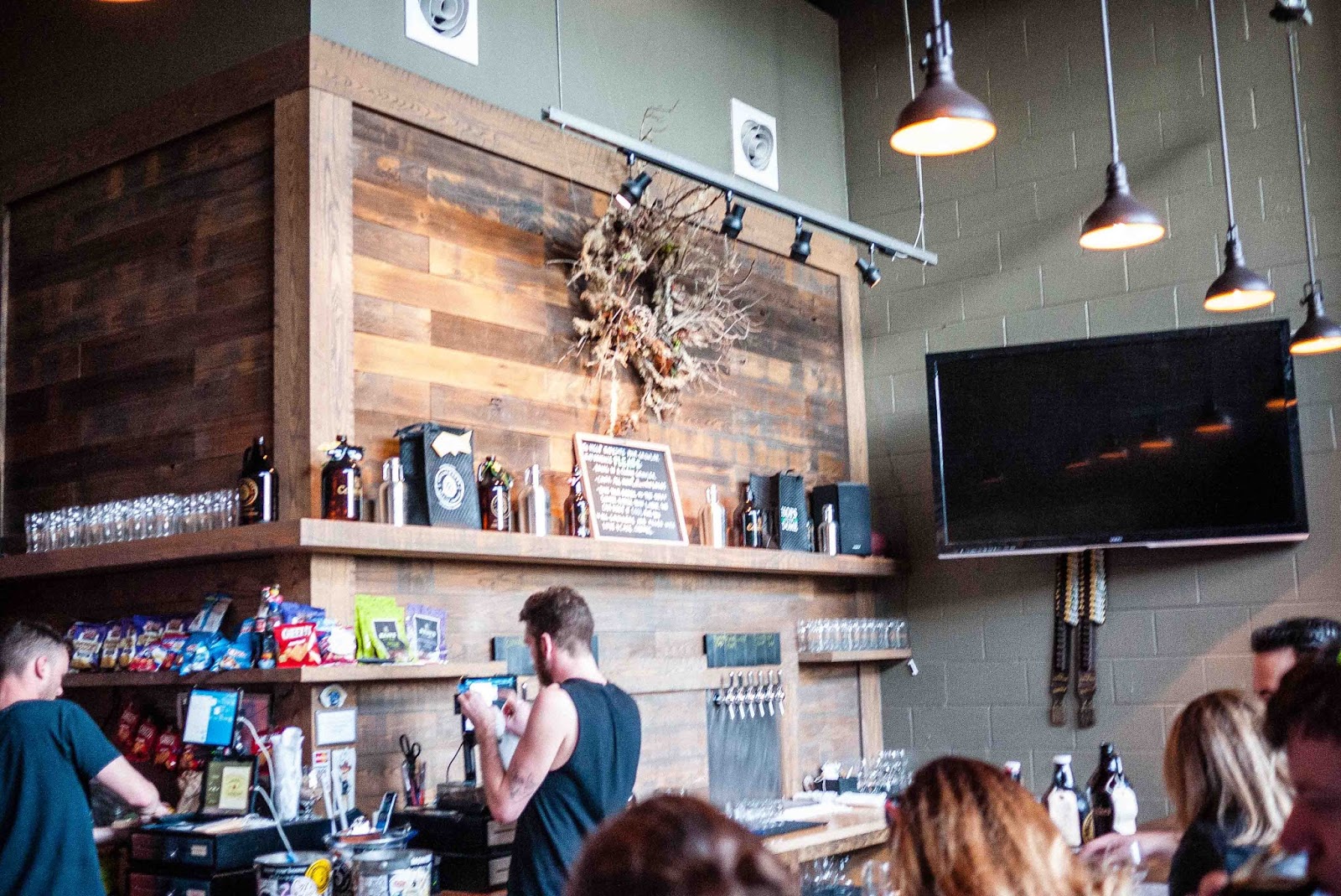
This weekend my wife and I made the trek north from Los Angeles to the Bay area to partake in the glorious Northern California beer scene. We got to visit some breweries and beer spots that had been on our bucket list for a good while - Sante Adairius Rustic Ales, The Rare Barrel, Cellarmaker, City Beer Store, and Bear Republic. Here are a few shots from the trip.

Sante Adairius Rustic Ales

Sante Adairius Rustic Ales

Sante Adairius tasting room
A few of SARA's fermenters
Flasks full of yeasty goodness
My wife, Cambria, enjoying some delicious beer
Cask 200
Backside view of the brewery

The Rare Barrel

A small sampling of the barrels at The Rare Barrel

Cellarmaker Brewing Co.

Cellarmaker's glorious taplist
Coffee & Cigarettes Smoked Porter and Island Culture Brett Saison

City Beer Store


Russian River (Pliny the Younger release)

The long line for the Pliny the Younger release. This was taken shortly before we gave up and left for Bear Republic.
Proof that we at least waited in line at Russian River. Hopefully next time we'll actually make it inside the brewery.

Bear Republic Brewing


Share:
Read More

Wednesday, February 3, 2016

Goses & Mimosas (Blood Orange Gose)


When life gives you blood oranges, make sour beer with it. I think that's how the old adage goes. Something like that. At least that's what I decided to do in this case. My wife and I went to a local farmers market a couple of weeks ago that sells all organic produce. After sampling blood oranges at a couple of booths, I couldn't turn them down. They were calling my name. I had already been planning to make a Gose, so I figured these strange beautiful fruits could only enhance the beer.

For this beer, I decided to kettle-sour with probiotics. I have been hearing about a lot of brewers using Lactobacillus Plantarum recently, as it's known to sour beer very quickly. A company called GoodBelly makes probiotic drinks with Lacto P, so I picked up a couple of their SuperShots, which are advertised to have 50 billion cultures per shot. Since this is only a 3-gallon batch, I figured 2 shots should do the trick.

As a side note, I think it's funny how quickly opinions and trends change in the American craft beer world. It was less than a year ago that I was seeing rants all over the place about quick-souring techniques and how they produce subpar beer. If anyone was making sour beer that wasn't aged long-term, it was considered inferior. Fast forward to today, and it seems like everyone and their brother (including some very well respected breweries) is kettle-souring and it's a totally acceptable practice. While I agree that a kettle-soured beer can't match the complexity and nuances of a 2-year old barrel-aged sour, I think it's a great technique for beers like Gose and Berliner Weisse where you want that straight forward lactic note.

So anyway, for this beer, I mashed and sparged with my normal process, drained to the kettle, then I pre-acidified the wort down to a pH of 4.5 using lactic acid. This prevents some funky bacteria from developing and is also rumored to help with head retention. I then dropped in my wort chiller and boiled for 15 minutes. It wouldn't be necessary to boil that long - a minute or two would do the trick, but I went ahead and boiled for 15 minutes just in case there were any funky bugs living on my wort chiller. After boiling, I cooled the wort down to around 115 degrees, pulled out the wort chiller, and pitched in the two GoodBelly shots. I covered the top of the kettle in plastic wrap and put on the lid.

It turns out Plantarum is quite an animal. After 10 hours, the pH had dropped to 3.93. The next morning, about 19 hours after pitching the GoodBelly shots, the pH was down to 3.56. Pretty impressive stuff. I was shooting for the high 3.4 range, so I left it a few more hours until it hit 3.48. I didn't want this to be a mouth-puckering sour - I was shooting for more of a gentle, subtle acidity. Plus, I know that adding the blood orange juice would further drop the pH, so I didn't want to go too low. I should also note that I didn't do anything to maintain the warm temperature. I started it off at 115 degrees and just let it cool naturally. It was room temperature by the next morning. Below is a fancy chart showing the drop in acidity over time.


Once I hit my target pH, I boiled the wort again for about 15 minutes. At the end the boil, I added sea salt, coriander, and the zest and juice of 5 blood oranges. I took a pH reading after adding the blood orange juice, and it was down to 3.42. Once the fermentation is under way, I'm planning to add the zest of 5 more oranges. Lastly, to provide some more complexity, I decided to ferment the beer with the Sacch. Trois strain.


Recipe Specifications
Batch Size (fermenter): 3.10 gal
Estimated OG: 1.032 SG (before adding fruit)
Estimated Color: 3.0 SRM
Estimated IBU: 0 IBUs
Brewhouse Efficiency: 70.00 %
Boil Time: 30 Minutes (15 min before souring, 15 min after)

Fermentables:
50% - Belgian Pilsner Malt
50% - Wheat Malt

Hops:
None!

Yeast & Bacteria:
2 GoodBelly SuperShots (for kettle-souring)
Sacch. Trois (WLP644)

Other ingredients: 
.30oz Sea salt (1 min)
.38oz Crushed coriander (1 min)
Zest and juice of 5 Moro blood oranges (flameout)
Zest of 5 More blood oranges (added to secondary, 4 days)

Water:
RO water with 3.1 grams of calcium chloride added to strike water.

Mash:
Single-infusion @ 148 degrees

Notes:

Brewed on 1/30/16.

Also added 4oz of rice hulls to the mash. 

Made starter with 1 vial of WLP644. Started with .5L, fermented for 2 days, then stepped up to 1L. Pitched whole thing. Started fermentation around 71 degrees.

2/6/16 - Transferred from 5-gallon carboy to 3-gallon carboy. SG at 1.008.

2/18/16 - Added the zest of 5 more blood oranges.

2/22/16 - Kegged - shooting for 2.8 volumes of carbonation.

Tasting update:
This beer has a light-to-medium clean acidity, a touch of complexity from the Trois strain, a super juicy taste and aroma, and just a touch of saltiness on the finish that keeps you coming back for that next drink. The orange character really comes through. It's almost like drinking a more complex, alcoholic version of orange juice. Yum. I don't think would change anything if I were to brew this again.


Share:
Read More

Wednesday, September 23, 2015

Raspberry Brambic - Lambic-style Ale


In October 2013, on our honeymoon, my wife and I visited Belgium, the land where Cantillon and Drie Fonteinen flow like water. There I truly came to appreciate the wonder that is Belgian Lambic. For me, there are very few memories I have more glorious than sitting late at night in a cozy, warm, bar in Bruges called Cafe Rose Red, sipping on lambic and other amazing Belgian beers. It's enough to bring a tear to this beer lover's eye. Tart, vinous, and complex, Lambic is an amazing beverage, and more so, it's forever connected to my memories of roaming around Brussels and Bruges for the first time with my wifey, drinking in the best bars in the world, and getting all sorts of cultured.

About six months after getting back from that trip, I decided to try my hand at a Lambic-style ale which shall be named Brambic. I'm calling this a "Lambic-style" ale rather than a Lambic for the following reasons:

1) It's not made in Belgium. 
2) I don't have the patience for a traditional turbid mash, so I'm going with my standard single-temp infusion mash. 
3) It's fermented with a blend of cultured yeast and bacteria along with bottle dregs in glass, rather than spontaneously fermented and aged in oak barrels. 
4) It's a straight unblended beer, rather than a blend of old and young vintages. I couldn't possibly wait 3 years to drink it. 

So in reality, it's pretty far from a traditional lambic, but if it lands anywhere in the same ballpark, I'll be happy. 

For the grain bill, I went with a simple mix of 2-row and flaked wheat. In the hop department, I went the traditional route by using aged whole leaf hops. I didn't have aged hops on hand, so I ordered mine, ironically, from freshops.com. 

For the yeast and bacteria, I decided to go with the Wyeast Lambic Blend. I failed at recording the exact dates, but a couple of weeks after the Lambic Blend got its start, I pitched the dregs from a bottle of Cantillon with the hope of getting some Belgian magic in my beer. A couple of months later, I pitched the dregs from a bottle of Jolly Pumpkin's beer.

For the first 3-4 months, I kept this beer in my temperature controlled fermentation chamber at around 70 degrees. After that, I moved it to a closet in my house where it sat for another 8-9 months before I racked it onto 3 lbs of raspberries. I gave it another 4 months sitting on the raspberries before bottling.  


Recipe Specifications
Batch Size (fermenter): 3.10 gal
Estimated OG: 1.055 SG
Estimated Color: 4.8 SRM
Brewhouse Efficiency: 70.00 %
Boil Time: 60 Minutes

Fermentables:
65% - 2-Row Pale Malt
35% - Flaked Wheat

Hops:
1.55 oz. Aged Willamette (Whole Hops) @ 60 minutes

Fruit:
3lbs - Raspberries - racked onto after 1 year of aging

Yeast/Bacteria:
Wyeast 3278 Belgian Lambic Blend
Cantillon dregs
Jolly Pumpkin dregs

Water:
50% Duarte, CA tap water
50% RO filtered water
Added 1.9 grams of gypsum and 1.9 grams of calcium chloride to strike water

Mash:
Single-infusion @ 153 degrees (60 min)

Notes:
Brewed on 4/12/14.

4/20/14 - SG is at 1.012. No sourness detected yet.

4/25/15 - Racked beer onto raspberries.

8/23/15 - Bottled the batch. Added fresh yeast (red wine yeast) for carbonation.


Share:
Read More

Tuesday, June 23, 2015

Wallonian Farmhouse Ale w/ Apricots


It had been a while since I made a fruit beer, so I decided it was high time to brew one up. Truth be told, I was originally planning to make this beer with peaches. I went to my local fancy grocery store and bought the nicest fuzzy organic peaches I could find. Unfortunately after about one day of sitting on my kitchen counter, they were completely bombed with mold, so I went back to the store and begged for my money back. Luckily they were cool, gave me my 10 bucks back, and I decided to spend it on some nice looking apricots that just came in instead. I know it's hard to get anything more than a subtle peach flavor in beer using real fruit anyway. Forget you, peaches.

So now that the fruit situation was settled, I was pretty much good to go. I was excited for this beer because I'm using a new yeast - Wallonian Farmhouse from The Yeast Bay. From the description on their site, they say this is "one of the 'funkiest' clean yeast we have in our stable". They also describe it as imparting a slight earthy funk and tart character. All of that sounds pretty delightful to me. I have read others describing the yeast character as being anywhere from awesome to strange, so I guess we'll see what happens. 

For the recipe, I kept things fairly simple like I usually do with most farmhouse-style ales - Pilsner, Munich, and Flaked Wheat for the grain bill and mostly noble hops. I also added some honey to help dry the beer out a bit more and add some complexity. I've learned that I prefer my saisons to have some nice hop aroma and a touch of extra spice, so I went heavy-handed on the hops at the end of the boil and also added some coriander and cumin.

After the primary fermentation had finished up, I chopped, de-pitted, and pureed my 3.25lbs of apricots, moved them into a sanitized carboy, and racked the beer on top. Unfortunately, I didn't leave enough head space, so the next day I found the aftermath of an apricot explosion inside of my fermentation chamber. This yeast doesn't play around. Live and learn I guess.

After a week or two on the apricots, this one will be headed to a keg, so I'm looking forward to trying it soon. 

Recipe Specifications
Batch Size (fermenter): 3.10 gal
Estimated OG: 1.046 SG
Estimated Color: 4.0 SRM
Estimated IBU: 25.4 IBUs
Brewhouse Efficiency: 75.00 %
Boil Time: 90 Minutes

Fermentables:
79% - Belgian Pilsner
10% - Dark Munich Malt
5% - Flaked Wheat
5% - Honey (last 10 minutes of boil)
1% - Acid Malt

Hops:
.85 oz. Saaz (Pellet, 3.1% AA) @ 60 minutes - 17.8 IBUs
.48 oz. Styrian Goldings (Pellet, 3.4% AA) @ 20 minutes - 6.7 IBUs
1 oz. Styrian Goldings (Pellet, 3.4% AA) @ 1 minute - 1 IBU

Other:
.21 oz. - Freshly crushed coriander seed @ 5 minutes
.42 grams - Cumin @ 5 minutes

Fruit:
3.25lbs - Apricots (pureed) - racked onto after primary fermentation

Yeast:
The Yeast Bay Wallonian Farmhouse (.5L starter)

Water:
RO filtered water - added 3 grams of calcium chloride, 2 grams of gypsum, 1 gram of Epsom salt, and .5 gram of baking soda to the strike water.

Mash:
Single-infusion @ 149 degrees (90 min)

Notes:
Brewed on 6/7/15.

6/13/15 - Chopped, removed pits, and pureed 3.25lbs of apricots. Racked beer onto puree. SG was down to 1.004 before racking.

6/14/15 - Opened fermentation chamber to find apricot puree all over because I didn't leave enough headspace in the carboy. Lesson learned.


Share:
Read More

Sunday, May 31, 2015

Orange Blossom Saison


The original farmhouse beers were brewed with whatever ingredients were on hand or available at the time - these were beers that truly represented the place that they were from. Unfortunately, I don't have the resources to brew with 100% local ingredients (or the time - I don't farm, bro), but for this particular beer, I was able to utilize at least one awesome local ingredient - locally sourced orange blossom honey. I stumbled upon this glorious nectar at my local farmer's market and knew it would be great in a beer.

I kept the grain bill pretty simple for this one - mostly pilsner with some wheat and munich malt. I wanted the orange blossom honey to lend some character to the beer but not dominate it, so I kept it to around 6% of the total fermentables with the hope that it would help dry the beer out and also lend some complexity to the aroma and flavor.

For hops, I used some leftover EKG and Styrian Goldings for bittering and flavor. I wanted this beer to have some nice hop aroma as well, so I added a fair amount of Hallertauer with a couple of minutes left in the boil. I picked up some coriander seeds from an Indian spice shop down the street from my house which I added for some additional spicy notes.

Not long before brewing this, I had tried the beer, Joey Pepper, a collaboration from Evil Twin and Sante Adairius, and I really loved the subtle funk from the Brett Claussenii. I had never brewed with it before so I decided to try it out on this beer. I decided to pitch it in the primary along with Wyeast's French Saison strain with the hope of getting a very dry beer with some subtle funk.

Well, everything went smoothly on brew day, but about 24 hours into the fermentation, the temperature controller on my fermentation box (chest freezer) went wacky and kicked on the compressor until the beer was down to 53 degrees. Naturally, I was enraged when I got home to find this, but after 5 or 6 F-bombs and some good ol' fashioned bitching, I pulled myself together, set the temp to around 71 degrees, and let it slowly rise back up over the course of two days.

The temperature drop caused the fermentation to move incredibly slowly, but after about 3 weeks, the gravity was all the way down to 1.003 and it tasted really nice so my worries faded away. Even with the troubles, this beer turned out great. It might be my favorite of all the saisons I've brewed. It's bone dry, spicy, fruity, and the orange blossom honey added a nice layer of complexity to both the aroma and flavor. I don't think many people would pick out the honey, but it definitely gave the beer that "je nais se quoi" that I find in some of my favorite commercial saisons.

I entered this one into the National Homebrew Competition and was very happy with the 40 the judges scored it. One of the judges was even the head brewer/co-founder from one of my favorite San Diego breweries so it was great to get good feedback. It didn't move on to the final round, but it did go to a Mini-Best of Show round and earned a gold certificate so I'm a pretty happy camper.


Recipe Specifications
Batch Size (fermenter): 3.00 gal
Estimated OG: 1.052 SG
Estimated Color: 4.2 SRM
Estimated IBU: 26.3 IBUs
Brewhouse Efficiency: 70.00 %
Boil Time: 90 Minutes

Fermentables:
80% - Belgian Pilsner  
7% - Munich Malt
7% - Wheat Malt
6% - Orange Blossom Honey (last 10 minutes of boil)

Hops:
.48 oz. East Kent Goldings (Pellet, 5.1% AA) @ 60 minutes - 16 IBUs
.20 oz. Styrian Goldings (Pellet, 4.5% AA) @ 60 minutes - 5.9 IBUs
.20 oz. Styrian Goldings (Pellet, 4.5% AA) @ 20 minutes - 3.6 IBUs
.40 oz. Hallertauer Mittelfrueh (Pellet, 3.9% AA) @ 2 minutes - .9 IBUs

Other:
.20 oz. Freshly crushed coriander seed @ 5 minutes

Yeast:
Wyeast French Saison - pitched in primary
White Labs Brettanomyces Claussenii - pitched in primary

Water:
RO filtered water - added 3 grams of calcium chloride, 1.5 grams of gypsum, and 1 gram of Epsom salt to the strike water.

Mash:
Single-infusion @ 147 degrees

Notes:
Brewed on 10/19/14.

10/20/14 - Temperature controller on fermentation chamber shorted out 1 day into fermentation. Dropped temp down to 53. Son of a gun. Warmed back up to 71 over the course of 2 days.

10/24/14 - Fermentation is now moving slowly. SG is only at 1.017. Still bubbling steadily.

11/8/14 - Gravity is down to 1.003. Tasting nice.


Share:
Read More